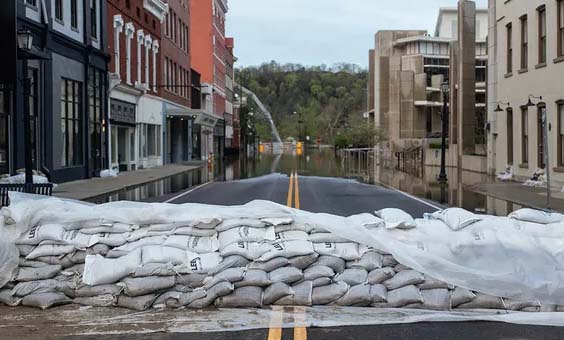
One year after the historic flood that impacted our community, recovery remains top of mind for many Frankfort families. While progress has been made, we know some residents are still rebuilding their homes, businesses, and lives. And in the city, we are focusing on reducing the impact of future flooding.
Last month, Frankfort City Commissioner Kelly May and I traveled to Washington, D.C., to attend a special American Flood Coalition conference for local elected officials. The event brought together local leaders, experts, and policymakers from across the country to discuss flood mitigation, resilience, funding opportunities, and lessons learned from recent disasters.
The conference provided valuable insights into how Frankfort can better prepare for future flooding events. It also highlighted the importance of thinking beyond our borders and pursuing a comprehensive regional approach to reducing flood risk.
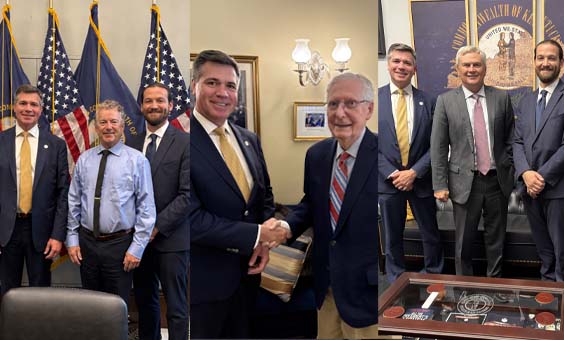
While in Washington, we also met with Kentucky’s congressional delegation, including Senators Mitch McConnell and Rand Paul and Congressman James Comer. We discussed Frankfort’s recovery efforts, the need to modernize FEMA, and opportunities to better support communities facing recurring flood threats.
I was especially pleased to personally thank Congressman Comer for his support in securing $5.8 million in FEMA funding for the Frankfort Riverbank Stabilization Project. This investment will help protect public infrastructure along our riverfront and represents an important first step toward creating a safer and more resilient riverfront for future generations. Further, it will allow us to move forward with adding amenities and improving access that will draw more residents and visitors to the waterfront.
I believe Frankfort’s path forward involves a three-part strategy focused on resilience, recovery, and long-term preparedness.
First, we must continue to protect and improve our public riverfront. The Kentucky River is one of our community’s greatest assets and remains central to our identity. Through the riverfront planning process currently underway with Sasaki, we have an opportunity to create one of Kentucky’s premier public spaces. Before that vision can be fully realized, however, we must continue investing in stabilization, resilience, and public infrastructure improvements.
Second, we must continue working to identify solutions for residents and businesses affected by flooding. Public infrastructure is important, but so are the families and business owners who are directly impacted by flood events. We must continue pursuing resources and partnerships that help homeowners and businesses adapt to future flooding and, where appropriate, recover from the impacts of last year’s disaster.
Third, and perhaps most importantly, we must expand our view and pursue a regional strategy. Last year’s flood was simply too close for comfort.
The Kentucky River does not recognize city limits or county boundaries. What happens upstream affects communities downstream, including Frankfort. If we are serious about reducing future flood risks, we must look beyond local projects and adopt a comprehensive, watershed-wide approach focused on reducing runoff, managing stormwater, and slowing inflows throughout the basin.
Even modest reductions in peak river flows could make a meaningful difference during major flood events. A reduction in inflows of just 10 percent could significantly lessen the severity of future flooding and reduce risks to homes, businesses, critical infrastructure, and the flood protection systems that safeguard our community.
This is not a challenge that Frankfort can solve alone. It will require cooperation among cities, counties, state agencies, utilities, and private landowners throughout the Kentucky River watershed. It will also require sustained oversight and commitment that extends beyond election cycles and individual administrations.
One of the commitments I am making is to work with the Commonwealth and regional partners, such as the Kentucky River Authority, to ensure that a comprehensive watershed management and resilience strategy is implemented. Last year’s flood reminded us that recovery is local, but resilience must be regional.
The work ahead will not be easy, and it will not happen overnight. But if we are willing to think beyond our jurisdictional boundaries and act with a long-term perspective, we can make meaningful progress toward protecting Frankfort and communities throughout the Kentucky River watershed for generations to come.
Frankfort’s past and future have always been tied to the Kentucky River. As your mayor, I remain committed to creating a more sustainable relationship with it so that future generations inherit a city that is stronger, safer, and more resilient than the one we know today.
All my best,